Showing posts with label Fishery. Show all posts

Saturday, January 20, 2018

Crustaceans in the Arabian Gulf (I): Crabs 阿拉伯灣的甲殼類 (I)螃蟹

The Arabian Gulf is a shallow sea with depth mostly less than 60 m. The seabed is generally covered by soft-materials, such as sand and mud. In the nearshore waters along the coastline, there are belts of sea-grass/macro-algae meadows, which nourish plenty of invertebrates and fishes. According to the archeological study , people living along the coast of the Arabian Gulf have been harvest various marine organisms for thousands of years. 

There is a misunderstanding that the Arabian people do not eat anything from the sea but fish, which is not the case at least in present days. Crustaceans, crabs, sand lobsters, and prawns, are one of the most important invertebrates that are commercially harvested by the fishermen in the Arabian Gulf. Shrimps, either caught from the wide or cultured in the ponds, are popular food items widely consumed by the people living in Saudi Arabia. Lobsters are rare and expensive delicacy often found in the restaurants. On the contrary, the crabs, mostly the blue swimming crab (Portunus pelagicus), are also harvested in large quantities but receive seemingly far less attention from the local people. In Bahrain, crabs are listed in the menu at times, but it is rarely found in the restaurants in eastern Saudi Arabia, suggesting that people do not have good appetite for crabs [Remark: Blue swimming crab is considered as four different species, and the one distributed in the Arabian Gulf is proposed to be Portunus segnis. However, i still keep use the old name Portunus pelagicus for the blue swimming crab.] 

阿拉伯灣是一個深度多在60米以下的淺海地區,海底多是軟質的沙泥混合地質所組成。在靠近海岸的地區,有一連串的海草/海藻床,孵育了大量的無脊椎動物和魚類。根據研究指出,在阿拉伯半島沿海地區的人民,捕撈海洋生物為食,已經有數千年的歷史。通常對於海灣地區的阿拉伯人有個誤解,認為海洋生物他們只吃魚。但至少在現今,他們不只吃魚,也很愛吃蝦子。不管是野生或是養殖蝦,沙烏地人都消費了相當可觀的量。龍蝦,也是常出現在餐廳裡的高級美食。然而相對於前兩類,螃蟹類在這裡的確沒什麼出現。在對岸的巴林,偶爾還會出現在餐廳的菜單上,但是在沙烏地東邊,螃蟹極少出現在餐廳,代表出沙烏地當地對於螃蟹可能還沒有很高的接受度。


遠洋梭子蟹(市仔)是沙烏地阿拉伯灣海域最常見的食用螃蟹種類。
  Blue swimming crab (Portunus pelagicus) is the most common commercial crab species

市仔在巴林偶爾會出現在餐廳,但在東沙烏地相當少見。
 Crabs show up occasionally in the Bahrain restaurants, but is rarely seen in those in eastern Saudi
在沙烏地阿拉伯東岸,螃蟹漁業最主要在南邊的海域
In eastern Saudi Arabia, the crab fishing ground mainly located at the southern part

魚貨上岸時,習慣是將雌雄分開。這是身體偏褐色、大螯較短的雌性。
The fishermen usually separate males from the females. Female crabs are brown-bodied with shorter claws.

雄蟹通常體型較大、步足藍色、大螯也較長
Male crabs are usually larger with longer claws.

這邊海巡檢查蠻盡責的,每一箱螃蟹都要倒在平台上,確定沒有夾帶東西。
All the landings have to be checked before going to the market.

這漁港漁民主要用陷阱抓螃蟹,過期的魚就拿來當誘餌
This fisherman uses crab pot to catch the crabs, and the out-dated fish are the baits


開始烹調,先來個兩隻吧
Let's have two crabs for the dinner

港式避風塘炒蟹
Crab fried with Crispy Garlic (Hong Kong Style)

三杯炒蟹
Fried crab with Thai basil
鏽斑蟳 Charybdis feriatus 俗名花市仔,在沙烏地阿拉伯灣海域極少抓到,可說是夢幻的 種類。
Crucifix crab (Charybdis feriatus) is a crab rarely found in the Saudi waters in the Gulf.
鏽斑蟳味道是和市仔好上一些。
Crucifix crab tastes a bit better than the blue swimming crab.


Seafood is popular in Saudi Arabia, as in other countries. However, unlike in Asia countries where blue swimming crabs have decent prices, the crabs in eastern Saudi Arabia are among the cheapest item in the market with little interests from the local people. Frankly, I do not think the crabs here are as tasty as I have tried in Taiwan and other East Asian countries. Two critical issues are the lacks of proper preservation and food processing techniques. All crabs landed are dead, and therefore they do not fit well with Taiwanese or Chinese style dishes that are better with live crabs. (I do not have the courage, or a strong stomach, to try to make the "green mango salad with raw crab"). Also, there is no (or least little) industries that could peel the crab and sell the meat, either being frozen or in cans. Considering the fact of lack of appetite on crabs from the locals, most of the crabs landed in eastern Saudi Arabia should have gone to other places. This industry could have better profit if the cabs can be kept alive (for the Asia markets), or the meat could be extracted (for the western markets).

沙烏地就像其他國家一樣,海鮮相當的受歡迎。在亞洲國家,市仔要價通常不斐。但是在沙烏地東岸,螃蟹通常是最便宜的選項,當地人民對螃蟹也興趣不大。老實說,這邊的螃蟹肉蠻軟的,比不上和我在其他國家吃到的螃蟹 。這邊的螃蟹漁業,缺乏適當的保存技術,也沒有適當的食物處理技術。上岸的螃蟹都是死蟹,也因此在強調活蟹的台灣或中國料理上,就沒有那麼適合 (我也不敢嘗試,也沒那個胃,去做生螃蟹芒果沙拉)。另外,這邊也沒有引入螃蟹取肉技術。考量這邊人民對螃蟹沒什麼興趣,捕撈上岸的螃蟹,相信是輸出去其他地方。因此如果能夠引入活蟹保存技術,或是取蟹肉工廠,來滿足亞洲或歐美市場,這產業可能會有更高的獲利。

Saturday, October 22, 2016

20160226 Taipei First Fish Market 台北第一魚市場見訪


台北第一魚市果菜批發市場,位在華中橋台北市側 (台北市萬華區萬大路533號),是目前台北市最大的魚貨及蔬菜水果批發市場,地位應該有如築地魚市之於東京一樣吧。然而魚貨拍賣市場第一是開放時間很早,魚貨大概凌晨兩點就開始陸續卸魚,而拍賣四點就開始,對一般人實在是有點早。第二,也是最重要的,魚貨拍賣市場不對外開放,所以一般人想去看也沒辦法。還好都有團體可以安排導覽的服務 (https://play.niceday.tw/product/992),就趁回台短短的時間,來去參觀一下。


Taipei first fruit and vegetable wholesale market locates in the southwestern corner of Taipei-City, (No.533, Wanda Rd., Wanhua Dist., Taipei City 108, Taiwan), is the biggest wholesale market for the fresh fish, fruit and vegetable in Taipei City. Its role for supplying fresh fish to Taipei City is allegedly as similar as Tsukiji fish market to Tokyo, so i was interested in visiting there since some time. However, it opens early in the morning, as other wholesale auction fish markets in the world. The fresh fish arrive the market since 2 AM and the auction starts at 4 Am. In addition, only people with permission are allowed to enter the auction market. Fortunately, there is a tour host available (https://play.niceday.tw/product/992, only traditional Chinese version), and I registered one as i was in Taipei.    


既然有很多中盤商在這邊交易水果蔬菜和魚,導遊說,在市場附近的地區,是台北市產業公會最密集的地區  According to the guide, there are many merchants for trade on fruits, vegetables and fish. Therefore, the area around the market district has he highest density of trade unions in the Taipei City.


除了蔬菜水果魚,市場附近也有很多現做的豆腐店,一大早就做出最新鮮的板豆腐。這家店很親切地提供現榨無糖豆漿給大家喝。
Besides the vegs, fruits and fish, around the market there are a few tofu shops, producing fresh tofu in traditional style (the tofu is kept between wood plates, so that this style is called "plate tofu" in mandarin, meaning hard tofu). This shop is kindly offering us hot fresh soybean juice, based on which tofu is made.

貨車將貨物從產地運到市場,而電動小貨車就負責在市場內運送的任務。不同市場有不同顏色,例如紅色和黃色就運送不同的貨物。
The goods are transported to the markets by the trucks, and are transported inside the market by the small electricity-based carts. Different goods, such as vegs or fish, can be distinguished by colors of the carts.
早上四點半,魚拍賣市場已經充滿了運送活魚的卡車
AM 4:30, the outskirts of the fish auction market are already full of trucks for live fish.


魚市場拍賣主任,來替大家講解市場內拍賣的狀況
The manager of the auction market, who is introducing us about the fish auction market.

魚市場分成三區,分別拍賣近海野生魚、養殖魚,還有遠洋大型魚類。這裡是送到市場的近海野生魚,基本上都放在白色籃子內,一籃就是一個拍賣單位。
There are three zones in the fish auction market: nearshore wild fish, fish from aquaculture, and large fish from the far sea. Here are the fish caught from the wild, and they are put in a white plastic busket, the unit of the auction.  


更多在白色籃子內的"野生魚"。
More fish "allegedly" caught from the wild.


有興趣的買家,可以在開始拍賣前檢視漁獲。
Bidders can examine the fish visually before the auction starts.


拍賣開始。有資格的魚販,可以利用電子出價系統對想要的漁獲喊價。得標商和價格都會顯示在螢幕上。
The auction pricing. The qualified fishermen bit the fish being auctioned using electronic devices. The name of successful bidder and the price per kilo are shown in the screen at top. 
 
拍賣影片This is how the auction is going on.


在卸魚區的大黃魚(Larimichthys crocea),會有人(漁民自己選或市場指派)將卸下來的魚依照體型分級,將適當數量的魚裝籃。
Yellow croakers (Larimichthys crocea) in loading area. There are people (fishermen, or assigned by the market) separating the fish in the busket in proper number according the size.
排好一籃籃準備拍賣的"野生"進口黃魚。
Baskets of "wild caught" imported yellow croakers.
市場特點,進口漁獲也當是野生漁獲拍賣。除了對岸進口黃魚外,還有東南亞的紅條,葉門的白帶魚。
Imported fish that are regarded as "wild caught" fish: yellow croaker from China, coral trouts (or red groupers) front South-East Asia, and cutlass fish from Yemen. 


也有用保麗龍箱裝的"野生漁獲"。
"Wild caught" silver croakers in Styrofoam boxes.

除了野生漁獲,養殖魚類也是拍賣重點。
In addition to "wild caught", separate parts of fish are also taken to the auction.

台灣養殖魚的代表: 虱目魚。
One of the representative aquaculture fish in Taiwan: milk fish.

除了全魚,虱目魚的各個部位也會分開拿出來賣。
In addition to whole fish, fish from aquaculture are also objects of auction.

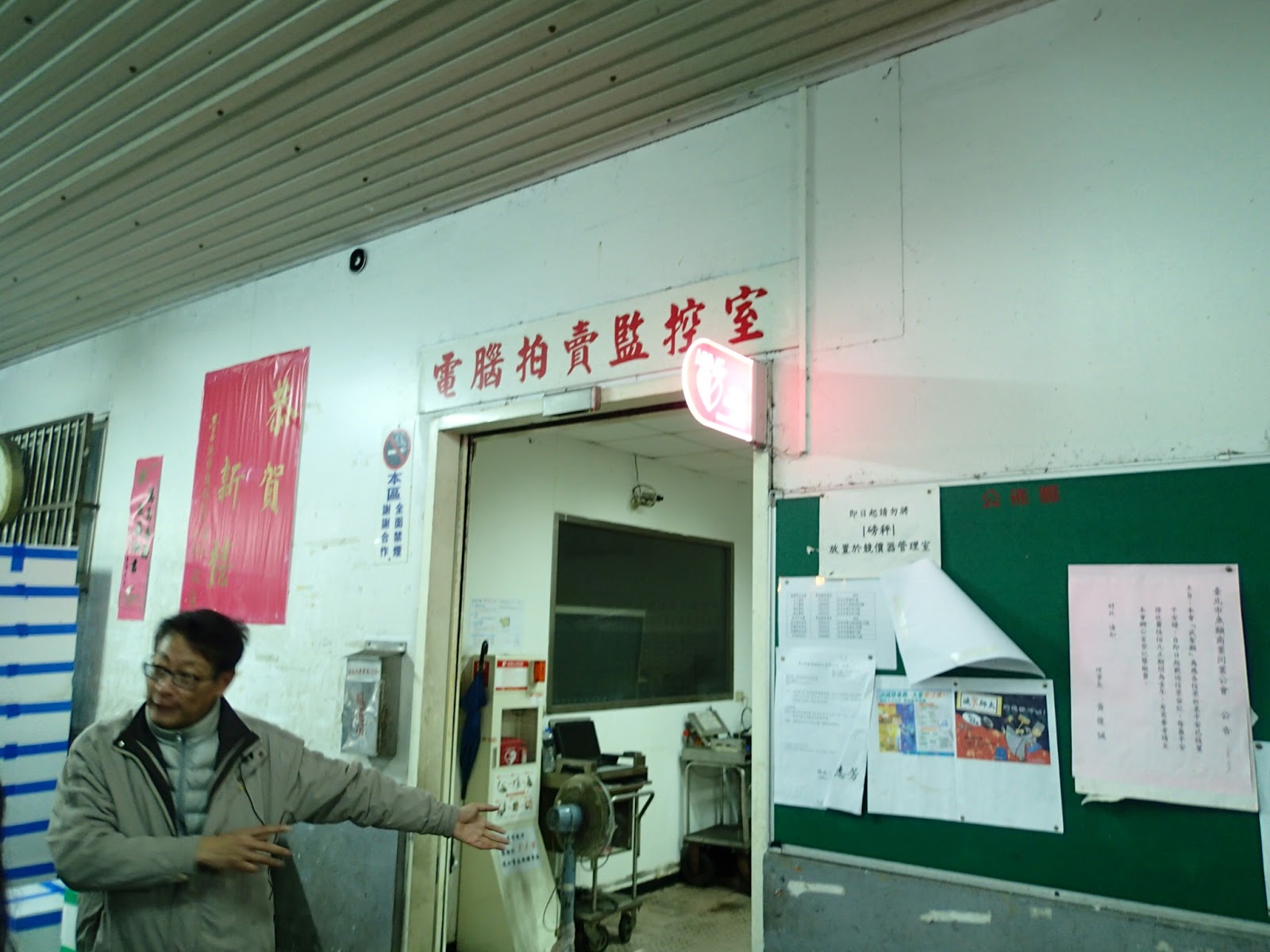
拍賣市場監測室。
The monitor room of the auction market.

在監測室內,每一個拍賣商都有存放自己拍賣記錄器的空間。
In the monitor room, each bidder has his own locker to lock his bidding recorder.

拍賣市場販賣部,賣些咖啡飲料。
Small shop in the market, selling drinks and can coffee.

 市場後面是遠洋大型魚類區。這邊似乎拍賣已經結束了,只剩下切魚的大嬸們在工作。
At the back of the market locates the region for large fish from far sea. It seems that the auction has ended, and fishwomen are chopping the large fish.

鯊魚和旗魚塊。
Chunks of sharks and billfish.

Saturday, April 5, 2014

甘比亞漁業總論 Introduction to Gambia Fishery

在說我們在甘比亞的時候,到底吃了哪些魚,讓我們繼續對甘比亞認識一下吧。

甘比亞即使以非洲的標準來看,發展程度也只能落在後段班。讓我們看看CIA 2007年報告中,甘比亞與其他西非的海岸國家(西非五小龍?)的比較(資料來源):

甘比亞在西非五小龍中(再次強調,沒有西非五小龍的說法),PPP也只比內亂多年的多哥好一點。更慘的是,甘比亞在預期壽命、識字率及援助比率方面,都在這五個西非國家敬陪末座,連有多年內亂的多哥都比老甘好。這也難怪有次在甘比亞遇到一個喀麥隆(Cameroon)人,他說這些甘比亞人,都是沒有水準的鄉下人。聽著一個老黑罵甘比亞,給我一種地區錯置的虛幻感。值得一提的是,迦納會有這麼高的通貨膨脹率,主要都是因為國際巧克力市場被外國人掌控,而他們國家又依賴國外進口的物資。當巧克力原豆價格低迷時,同樣的巧克力換得的資源變少了,國人就只能承受更高漲的物價。

According to CIA 2007 Factbook (Reference), there is little development when compared with other coastal countries in West Africa. The Gambians suffer shorter expected life, poor literacy rate, and higher percentage of foreign Aid. By the way, the high inflation rate in Ghana is likely the result of their high dependence on chocolate export, whose market is controlled by international companies.


甘比亞根據行政區,可以分成天龍斑竹區(Banjul)、西部區(Western Region)、北岸區 (North Bank Region)、下游區 (Lower River Region)、中游區及上游區。根據世界銀行2007年的報告,整體的甘比亞大概有60%的人落在國際貧窮線下(一天賺2.5美元),然而甘比亞天龍國斑竹區就和別人與眾不同,在斑竹區貧窮比率大約只有11%。出了斑竹區之後,上中下游省大概差不多窮。也難怪我們當初從中由省團部到首都,就好像到另外一個世界一樣。
另外如果依照河川的特性所分區,那麼從斑竹區一直到北岸區及下游區,鹹水影響終年存在,然而在中部省,大概在一半的地方往上游走,就是鹹水影響不到的區域。上游省則是全淡水,河流在此也比較狹窄。然而即使在上游省,河川水位仍然會受到潮水起落的影響而變化。


The Gambia is composed of six major districts, Banjul, Western, North Bank , Lower River, Central River and Upper River Region. Based on World Bank 2007 Report, the overall poverty rate is around 60 %, except in Banjul where it drops to 11 %. Outside Banjul, the poverty rate is similar for both rural and urban areas. This huge difference in the income levels between Banjul and other districts makes a great contrast in the landscape as well as the life styles. As I left the Central River Region and arrived Banjul, the differences in two places are so vivid that I thought they are in fact two different countries.


We can also interpret the districts from the hydrologic point of view.The Gambia River in the Banjul, Western and North Bank Region is constantly under the influence of saltwater from the Atlantic all year round. The brackish/freshwater transition zone locates in the Central River Region that the saline front locates in Sambang in the rain season and Kuntaur in the dry Season. The Gambia River is all freshwater and becomes narrower in the Upper River Region, and the water level is still subject to the tidal influences that go high and low with a regular rhythm.


甘比亞行政區圖,來源WIKI
The districts of the Gambia. Source: WIKI


甘比亞鹽度影響圖
The brackish water, brackish/freshwater transitin zone of Gambia.


甘比亞整個國家的漁業,如果以作業形式區分,可以分為工業化漁業(industrialized fisheries)及傳統漁業 (artisanal fisheries)。根據2014聯合國報告和美援報告,工業化漁業主要有兩個投資重心:昂貴的漁船(例如拖網漁船),以及漁獲處理系統,如處理工廠,而甘比亞的漁獲處理工廠主要集中在大西洋沿岸。在2012年中甘比亞主要有20家漁業公司,然而只有10家在海岸有處理工廠。而在其中的5家(Bara Fishing, Kendaka, Rosamond Trade, International Pelican, and West Africa Aquaculture)已經得到歐盟的許可,可以出口新鮮和冷凍漁獲,然而只有一家(Rosamond Trade)可以出口燻魚。

 工業化漁業似乎可以是甘比亞賺取外匯,以及提供當地人工作機會的一種產業。然而這些外資漁船捕獲到的魚,甘比亞人卻拿了不到10%的漁獲。主要原因就是,這些外資漁船在甘比亞水域作業完後,都跑到外國漁港卸貨,然後在外國當地的工廠處理、外銷到歐美國家。例如說拖網漁船,不是在塞內加爾卸貨處理,就是直接在海上處理好,再外銷到歐美。雖然甘比亞作業執照規定之一是,必須要有10%的漁獲要在甘比亞境內處理,但外資企業往往就直接交錢了事。這種不當的管理,使得工業化漁業,不但無法提供當地人漁獲,減少賺取外匯及提供工作機會的能力,也讓當地漁獲處理工廠面臨倒閉的危機。

Based on United Nation Report in 2014 (Ref) and US AID report, the industrial fisheries involve two important high-cost components: (1) fish production systems like trawlers and (2) processing systems, the factories. The industrial fisheries are operating mainly along the Atlantic coastline. As at mid-2012, there were 20 locally registered fishing companies in The Gambia, but only 10 companies had on-shore facilities (fish factories). Five of these (Bara Fishing, Kendaka, Rosamond Trade, International Pelican, and West Africa Aquaculture) had met the required standards and been certified to process and export fresh and frozen fish products to the EU. Only one factory (Rosamond Trade)  was  certified  to  export  cured  (smoked)  fish products to the EU. 

The industrial fisheries are important for its roles to earn foreign exchange, as well as to provide jobs to the Gambians . However, the industrial fisheries only contribute around 10 % of the total national consumption. The reason is that more than 90 percent of the licensed fishing vessels operating  in  Gambian  waters  are  foreign-owned and land their catches are landed abroad. For example, most of these trawlers land their catches in Senegal, or process them out at sea and then export to Spain, Greece, South Korea,..., etc. Although foreign trawlers are required  to land 10 percent of their catches in The Gambia, the foreign fishing companies claim that because of lack of deep port, and the handling space in the Gambian factories, they have to land their fish in overseas ports, after paying the value of the 10 percent to the Gambian  government as licencing requirement. This mis-management reduces the capacity of earning foreign exchange, generating employment opportunities and even makes some of the fish factories nearly go bankrupt. 
在大西洋岸Bakau港的燻魚場
Making smoked fish in Bakau, Atlantic coast


Credit: Fatajo et al.


相較於工業化漁業,甘比亞的傳統漁業包含比較多樣、低成本的捕撈方式,而大多使用低成本、低科技投入的獨木舟。漁業單位通常頂多就數人,大多數情況下只有一人。然而甘比亞全國消費的漁獲90%以上來自於傳統漁業,而甘比亞的漁業工廠,漁獲來源也有80%以上來自於傳統漁業。全甘比亞在2011傳統漁業漁民大約有6000位,大概有57%是甘比亞籍。外籍漁民在大西洋沿岸較多,大約占六成左右,而其中又大部分以鄰國塞內加爾人為主。以作業地區來區分的話,則可以沿岸漁業(Coastal fisheries)及內河漁業(Inland fisheries)。以產量而言,在大西洋海岸的沿岸漁業,在2007貢獻甘比亞將近80%的漁獲量,而内河漁業,只貢獻了剩下的20 % (Gambia Department of Fisheries, Source)。

The  artisanal  fisheries  consist  of  relatively  extensive, low-capital fishing  practices, usually the  dugout canoe with little equipment and technology. They run usually on individual base or a small group of a few fishermen.  Despite of the small-scale nature, the artisanal fisheries provide 90 percent of the total national fish consumption, and is the main source of raw material  (80 %) for the industrial fisheries processing plants. There are around 6,000 fishermen in the artisanal fisheries in 2011, 57 % are Gambians. However, in the Atlantic coast the foreign fishermen (mainly Senegalese) are in majority (60 %). If we classify the artisanal fisheries by the operation region, the coastal fisheries operating on the Atlantic coast contirbute 80 % of the fish landing, while the inland fisheries only contribute 20 %.

甘比亞在大西洋岸Bakau港的的傳統漁船
The artisanal boats in Bakau, Atlantic coast


甘比亞大西洋岸作業的傳統漁船
Dug-out canoe in the Atlantic coast of the Gambia


甘比亞內陸漁業,於中游省SAPU使用流刺網的馬利漁民
A Malian fisherman operating gilnnet in SAPU,CRR 
甘比亞內陸區傳統漁業會使用的漁具
Some fishing methods of artisanal fisheries in the inland fishery


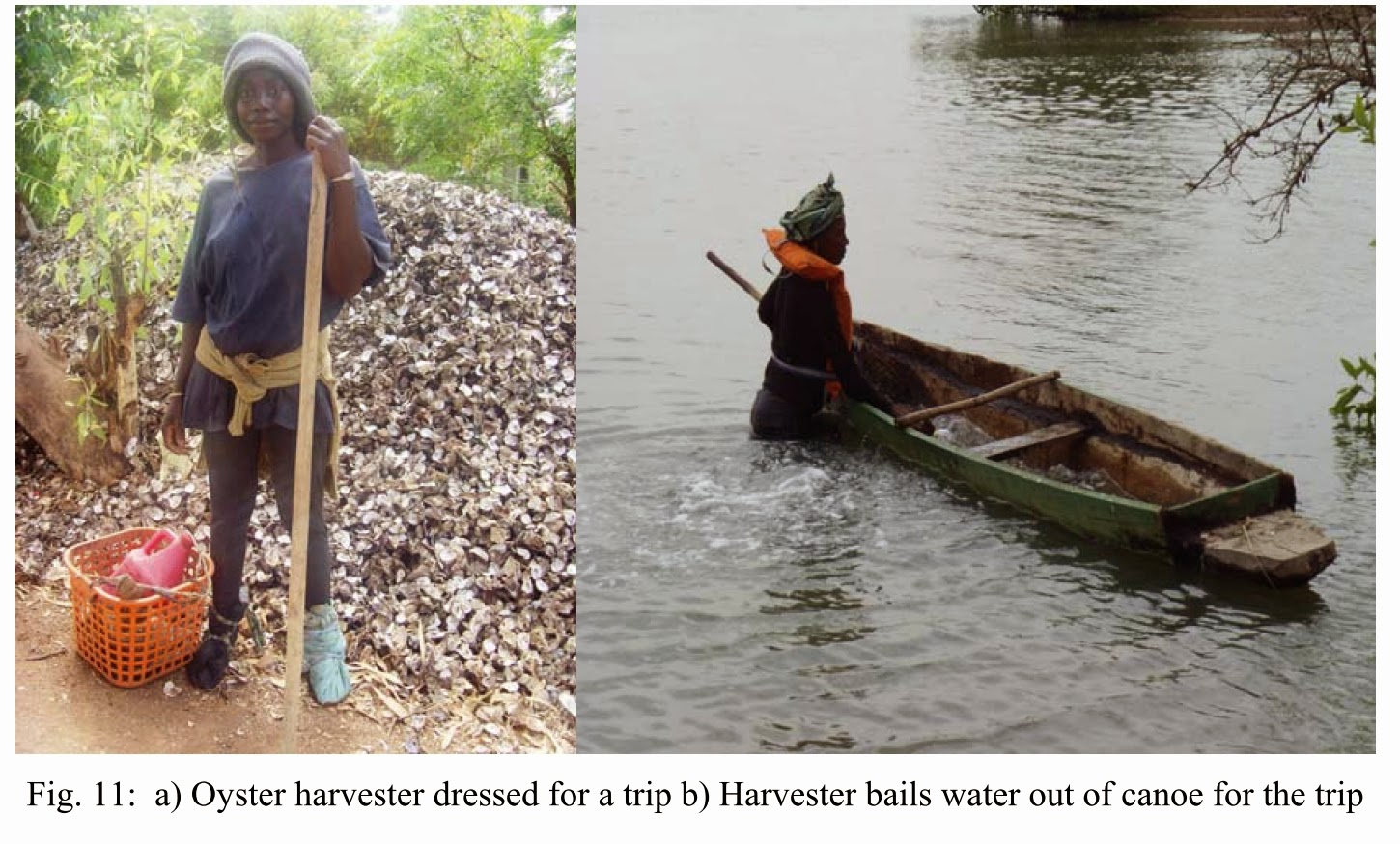
甘比亞傳統漁業,還有一點特殊的可以說:捕蚵和鳥尾蛤業。蚵季節在十一月到六月的乾季,而鳥尾蛤則在七月到十月的雨季。這漁業的參與者,從採集者、清理、分集到利用蚵殼製作石灰等整個生產鏈,幾乎都是女性在工作。 這些"海女"們就利用能承載1~2人的小獨木舟划船到採集點。負擔不起獨木舟的其他海女,就直接涉水走到膝蓋深的採集點。

 蚵和鳥尾蛤都只能在低潮的時候採集。以往海女們尋找紅樹林浸泡在海水中的根或枝幹,不是將整個枝幹砍下,就是把樹皮削下,然後將附著其上的蚵取下。現在他 們已經認知這樣會破壞紅樹林、減少產量,因為被砍下的枝條沒辦法給新的蚵附著,所以開始使用比較沒有破壞性的方法,用手斧等小工具,將蚵一個個從枝條上敲 下來。鳥尾蛤是在沙泥底質的灘地中,大部分用手耙砂,撈取在砂泥裡面的蛤。鳥尾蛤的產量和很多因素有關,如地點、季節、天氣等,但一個熟練的海女,可以在 運氣好的時候,一天撈上12到20公斤。


海女們將蚵和鳥尾蛤帶回處理地,先把附著在外面的物質清洗乾淨,然後把蚵或鳥尾蛤放入熱水烹煮或蒸煮30分鐘,不但讓肉軟化,也可以讓閉殼肌鬆弛, 之後方便去殼。將肉從裡面取出後,海女們會留一小部分給家庭,然後剩下的經過簡單的清潔後,不是直接拿到市場販賣,就是利用鹽或曬乾保存。在2011年的 時候,一小罐(150克)的小型蚵/蛤肉要價15達拉西(約15台幣),而體型較大的可以到20~25達拉西 (20~ 25台幣)。蚵殼可以之用做為石灰的原料,而石灰可用做製磚 、動物飼料,或是園藝裡的土質改良劑。然而鳥尾蛤殼可當建材的一種,拌入水泥後來鋪道路,或是做為房屋外圍的牆壁等用。

There is an interesting and unique sector in the artisanal fisheries of the Gambia that is worthy further dressing: the oyster and cockle fisheries. They received little systematic attention except a summary report from Njie and Drammeh (2011). Oysters are usually harvested during the dry season (Nov to Jun), and cockles are during the rain season (July t Oct). The harvesters are predominantly women, who participate all the process chain from collection in the mangroves, cleaning, grading to white lime production from the oyster shells. Some "fisherwomen" use dugout canoes capable of carrying 1 or 2 women and paddle from the bases to the harvesting sites. Other women who cannot afford the canoe simply wade into knee-deep waters to harvest the oysters. 


For both oyster and cockles, harvesting is only possible during the low tide. The fisherwomen used to harvest the oyster by chopping the whole or part of the mangrove roots and branches to which the oysters are attached. Now instead of chopping, they scrape the oysters with less destructive manners. To harvest the cockles, the women wade in the water and search the cockles in the muddy bottom mostly by their bare hand. On average, a specialized woman may collect between 12-20 kgs of cockles on a good day, but the quantities collected depend largely on sites, efforts and time of the year.


In their bases, after cleaning the foreign materials on the shell, the oysters and cockles are boiled or steamed for 30 minutes to one hour to soften the muscle as well as facilitate subsequent extraction of the meat. After extraction, the fishwomen keep some portion of the oyster meat for the family, and the rest are then marketed or stored for later used. In some other places, the meat is preserved by salting and sun drying. The price of the oyster/cockle meat in 2011 is around 15 GMD (~ 50 US cent) per 150 gram for small size ones, and could be 20 to 25 GMD ( ~ 75 US cent) per 150 gram for large ones. The shells are sold for the production of white lime, which can be later used in brick-making, the preparation of chicken feed or the horticulture industry as soil conditioner and fertilizer. In some places, the cockle shells are mixed with concrete for the road or walls of the houses.
 甘比亞採蚵女。Credit: Njie and Drammeh (2011)


蚵仔後處理流程圖
Generalized flowchart for oyster processing. Modified from Njie and Drammeh (2011)


市場上賣的蚵肉
Oyster Meat in the market. Credit: Allen
用鳥尾蛤殼鋪的路.
Road paved with cockle shells. Credit: Allen